02 — Water Pollution

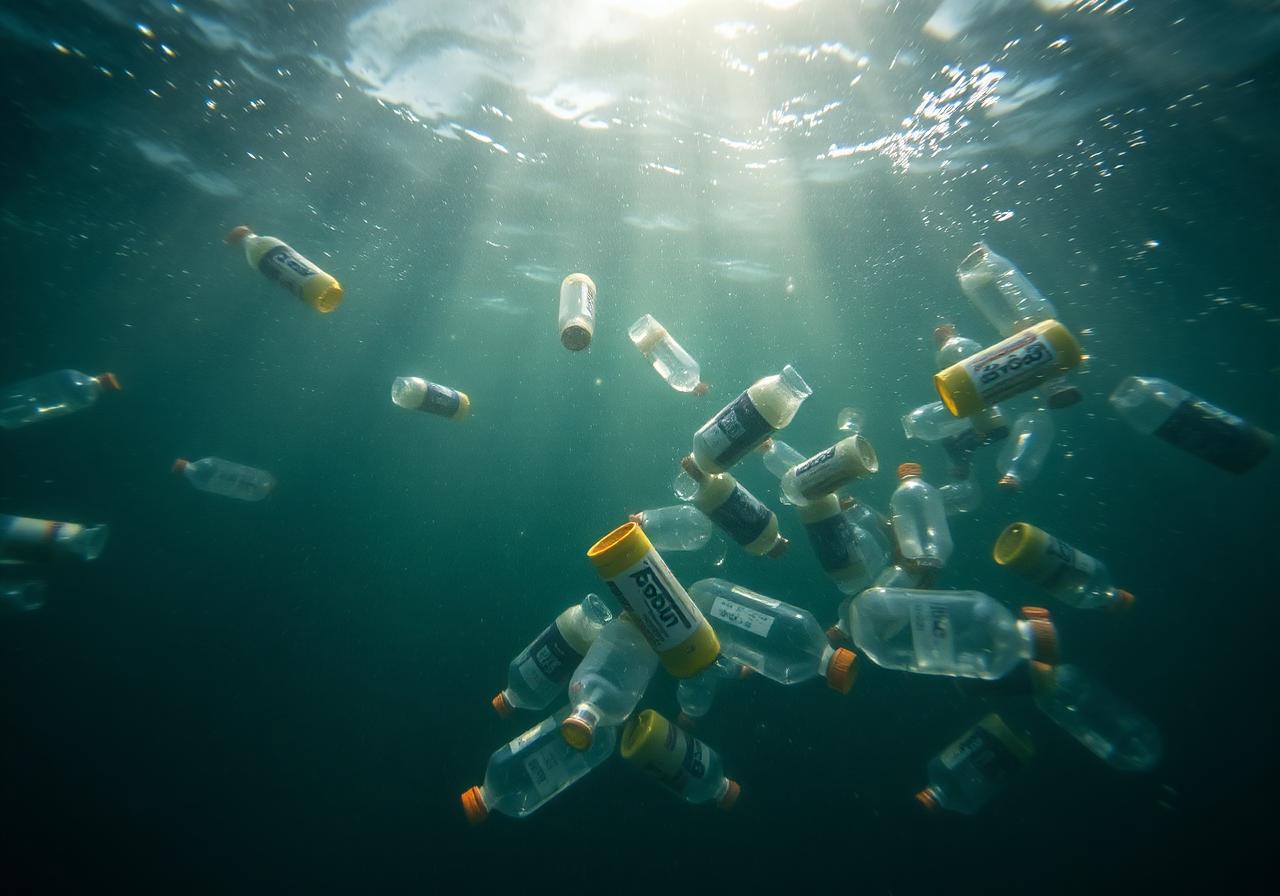
We've basically turned the ocean into a giant bin.

A whole rubbish truck of plastic ends up in the sea every minute. And the chemicals you can't see? They sneak into the food chain — and onto our plates.

0M t
of plastic dumped each year

Set to triple by 2040 without action

0+
ocean dead zones

Too little oxygen for life

0%
of pollution comes from land

Rivers, sewage and farm runoff

Mini-game
Clean the Ocean
Score 0
Time 20s
Tap the plastic. Save the sea.

You have 20 seconds.

Where does all this stuff come from?

It's way more than the bottles you see bobbing on the surface. It's tiny plastic bits found in Arctic snow, fertiliser washing off farms straight into the sea, and untreated sewage flowing into bays. And most of it? It starts on land, not at sea.

Plastic & microplastic

By 2050, the ocean could contain more plastic than fish by weight. Microplastics have been found in fish, sea salt, drinking water — and in human blood.

Nutrient runoff & dead zones

Nitrogen and phosphorus from farms trigger massive algal blooms. When the algae die, decomposition strips oxygen from the water, suffocating everything beneath.

Oil & chemical spills

From catastrophic tanker spills to chronic small leaks, hydrocarbons coat shorelines, kill seabirds, and persist in sediments for decades.

Ghost gear

Lost or abandoned fishing nets — 640,000 tonnes per year — keep killing marine life long after they've been discarded.

What SDG 14 says about it

Target 14.1 says every country has to seriously cut ocean pollution — especially the stuff coming from land — by 2025. There's also a global plastics treaty being worked on right now, and honestly it's the biggest test yet of whether the world actually means it.

References

Sources & citations

Harvard referencing style (generated via MyBib). All figures on this page are drawn from the publications below.

  1. Breitburg, D. et al. (2018) Declining oxygen in the global ocean and coastal waters. Science, 359(6371), eaam7240. Available at: https://www.science.org/doi/10.1126/science.aam7240 (Accessed: 15 June 2026).
  2. Pew Charitable Trusts and SYSTEMIQ (2020) Breaking the Plastic Wave: A comprehensive assessment of pathways towards stopping ocean plastic pollution. The Pew Charitable Trusts. Available at: https://www.pewtrusts.org/en/research-and-analysis/articles/2020/07/23/breaking-the-plastic-wave-top-findings (Accessed: 15 June 2026).
  3. United Nations (2023) The Sustainable Development Goals Report 2023: Special Edition — Goal 14: Life Below Water. United Nations, New York. Available at: https://unstats.un.org/sdgs/report/2023/Goal-14/ (Accessed: 15 June 2026).
  4. United Nations Environment Programme (2021) From Pollution to Solution: A global assessment of marine litter and plastic pollution. UNEP, Nairobi. Available at: https://www.unep.org/resources/pollution-solution-global-assessment-marine-litter-and-plastic-pollution (Accessed: 15 June 2026).